

SEO on Social Media: How to Increase Visibility
Search engine optimization has long gone beyond Google. Social media platforms have become full-fledged search engines in their own right—people use them to look for information, products, and answers to questions. That is why SEO principles are being applied more and more actively to TikTok, Instagram*, Pinterest, and other platforms.
If you properly optimize your profiles and posts for social media search, you will become more visible not only within those platforms, but also in traditional search engines. The result is greater brand awareness. This material will be useful for marketers who want to increase sales, creators focused on growing their audience, and SMM specialists who need clear performance metrics.
Here, we explain why SEO on social media is gaining momentum and share practical tips for improving visibility. We also provide step-by-step recommendations for each popular platform.
What does SEO on social media mean?
SEO on social media is a set of actions used to optimize an account and its posts so they appear more often in search results and recommendation feeds. Why it is worth doing:
Your profile and content get discovered more often. Optimized pages rank higher in search results and in sections such as "For You" and "Explore," which leads to more views.
Posts have a longer lifespan. A well-optimized post can continue attracting new visitors from search for months.
You can get ahead of competitors. SEO helps people find your content faster while others are still ignoring it.
It is more convenient for users. Accurate keywords help people quickly find what they need. For example, if you run a fitness blog and use phrases like "beginner home workouts" or "how to do burpees correctly," your videos are more likely to reach the people searching for exactly that.
Engagement grows. When a post directly answers a search query, users are more likely to like, comment, and save it. For example, a video targeting the query "home workout" is highly likely to be added to bookmarks.
How search algorithms actually work inside social media
To make content discoverable, you need to understand the mechanics.
TikTok (according to the platform's own data and reports by Backlinko and HubSpot) analyzes three types of data: caption text, text recognized directly on the video itself (OCR), and spoken language (speech-to-text).
👉 An important fact: a video can rank even without a single hashtag—as long as the key phrase is spoken out loud.
Instagram* takes into account the profile name, bio, captions, and alt text. The company explicitly recommends using "descriptive keywords rather than relying only on hashtags."
Pinterest is essentially a visual search engine, not just a social network. 80% of all searches there are non-branded queries.
The takeaway: you can "feed" the algorithm information through text, voice, visuals, and even scene context. Do not reduce everything to hashtags.
📊 Search behavior has changed: Google data
Google has publicly stated that about 40% of Gen Z use TikTok and Instagram* instead of Google for search. This fundamentally changes the approach.
TikTok → people search for recipes, places, tips, and how-to instructions
Instagram* → people search for brands, reviews, and visual examples
Pinterest → people search for ideas and inspiration
If your content is not visible in the internal search of these social platforms, you are losing a huge share of your potential audience.
Does SEO on social media affect rankings in traditional search engines?
Yes, it does. Google and other search engines index social media posts. The better your post is optimized, the easier it is for a search engine to understand and classify it—and the higher the chance that the post will appear in search results.
Example: a Pinterest post by the store Paradise of Gadgets appeared in Google search results for the phrase "phone cases with lip gloss." The reason was simple: the post used precise keywords.

SEO techniques for social media
If you want to improve your social media SEO, start using the following methods.
1. Research the search queries in your niche
Keywords are the foundation. Start by finding out which phrases your audience types in when searching for similar content or products.
The easiest way is to look at the suggestions in the platform's search bar. If you post recipes on TikTok, type in the word "cooking" and study the suggested options. They are based on real user queries, which makes them an excellent starting point.
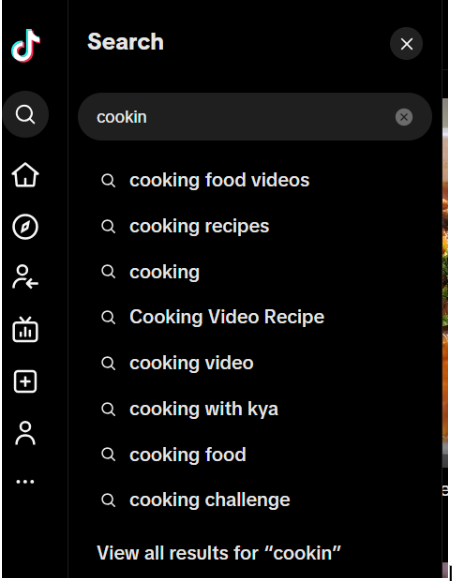
You can also use professional tools such as Ahrefs or Semrush. Like built-in tools, they show popular phrases related to the keyword you enter.
2. Where to place keywords: the full framework
Here are all the places where you should add key phrases:
Username → your main keyword (your topic)
Bio → 2–3 key phrases
Post caption → primary keyword + long-tail query
Hashtags → variations and synonyms
Alt text → the most accurate possible description of the image
Text overlaid on the video → additional keywords
Voice-over (spoken audio) → a hidden SEO layer (works on TikTok and Reels)
Use this list as a checklist every time you create a post.
3. Long-tail queries convert better
Long-tail phrases face less competition and attract a more targeted audience. Instead of the short phrase "cake recipe," use something like "20-minute no-bake chocolate cake." Today, social media algorithms focus on search intent rather than simple popularity. This is confirmed by research from Ahrefs and Semrush.
4. Optimize your profile
Your profile tells algorithms what your account is about. The more clearly you describe yourself, the higher the chance that your posts will be shown to the right people. Here is how to do it:
Clearly explain in your bio what you do and what value you provide.
Naturally include keywords in your username and description, without keyword stuffing.
Add links to important resources: your website, blog, or online store.
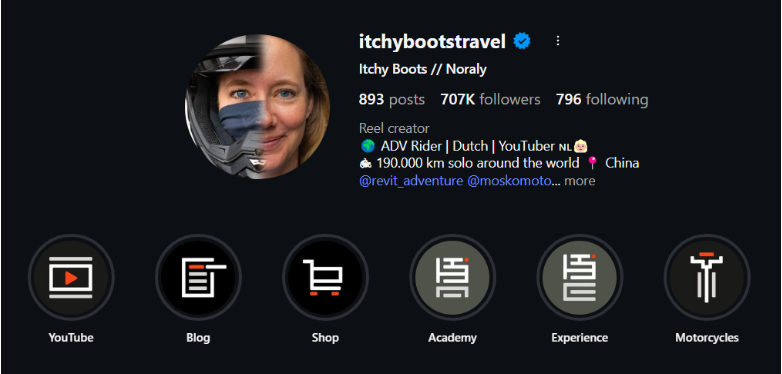
Example: the Itchy Boots. account. The creator chose a name that reflects the travel theme, clearly explained the essence of the content in the bio, and added a link to a book about her journeys.
5. Optimize every post
To make your posts easier to find, add relevant keywords. You can include them in titles, captions, and hashtags. This makes it easier for algorithms to match your content with user searches.
Try to make captions as informative as possible and fully aligned with the content. For example, if you publish a baking video, specify what kind of cake you are making—the algorithm will understand the topic better.
6. Write your own alt text
Many creators ignore this practice because platforms generate alt text automatically. But automation often produces overly generic descriptions that do not help promotion.
Add your own alt text—detailed and precise. This helps algorithms understand the post better and increases the chances of appearing in search.
For example, when posting a photo of a famous landmark on Instagram*, upload the image, go to the Accessibility section, and enter the landmark's name and location in the alt text field. Such a post is more likely to appear for searches related to that place.
7. Increase engagement
You might ask: what does engagement have to do with search? Everything.
Algorithms evaluate the value of a post based on the activity around it: likes, comments, shares, and saves. The higher the activity, the higher the post rises in feeds and search results.
That is why engagement work is essential. Here is how to increase it:
Ask followers to like, share, and comment on your posts.
Reply to comments and like them.
Like and repost other creators' content when it aligns with your topic.
The timing of publication also matters. When you post during your audience's peak activity hours, you get more immediate reactions—algorithms interpret that as value and expand your reach.
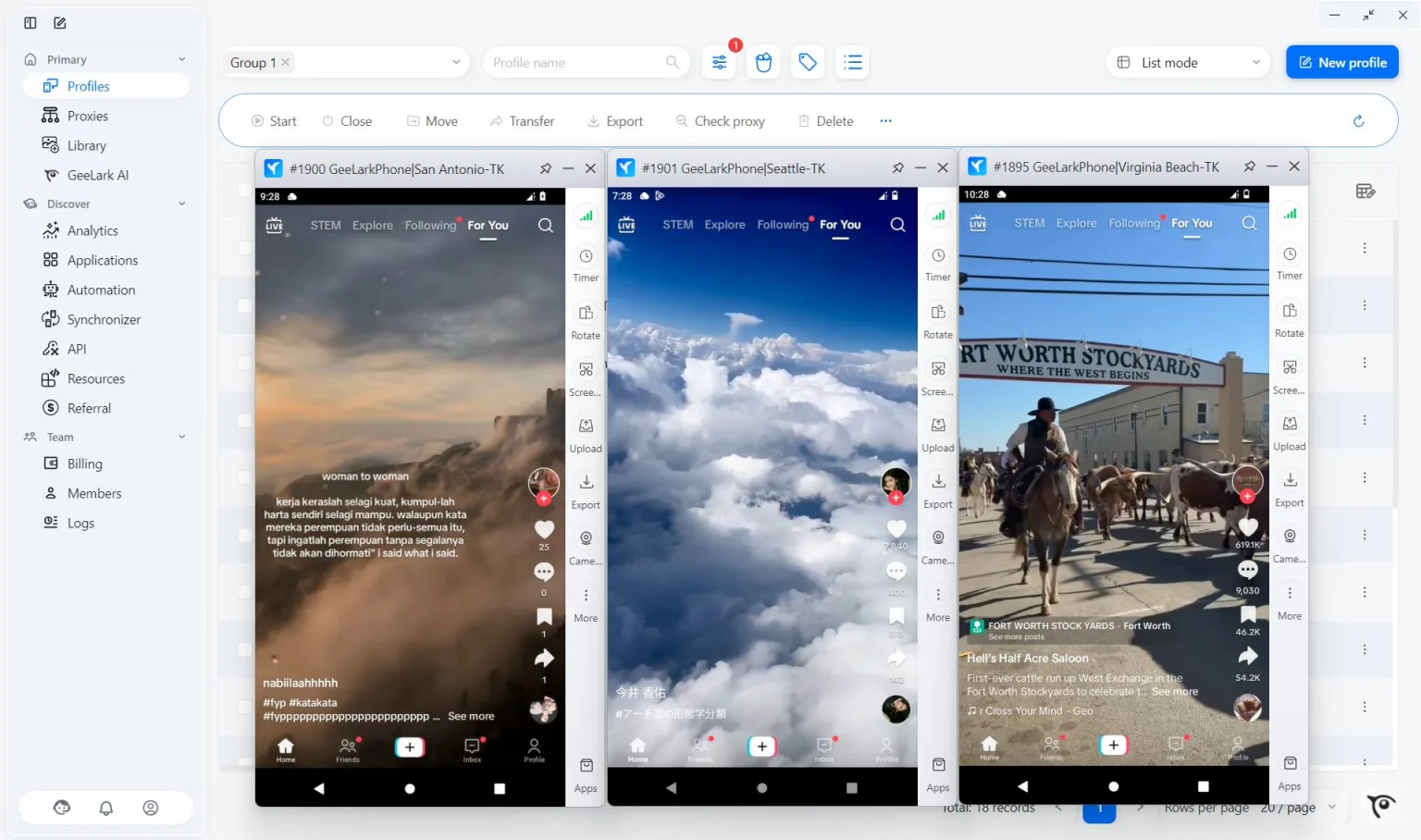
To take advantage of peak activity periods, you can use tools like GeeLark. It is a cloud solution for managing multiple accounts and scheduling posts at the right time.
8. Watch time is a key SEO factor
On TikTok and YouTube, watch time is one of the main ranking factors. According to YouTube, the algorithm promotes videos with high retention even if CTR is low. A practical rule: the first 3 seconds decide everything. Structure your video as hook → value → payoff. The longer a person keeps watching, the higher the chance that the video will be shown to others through search.
9. Collaborate with other creators
Collaborative projects with other creators are a great way to increase engagement. You expose each other to new audiences, your posts can appear on their pages, and your reach grows. Additional activity signals to algorithms that your content is valuable.
Collaboration formats include co-created posts, repost exchanges, duets, and live streams. It is best to choose partners from your niche who share similar values—this helps attract a relevant audience and generates a stronger response.
10. Stay consistent with publishing
Algorithms give preference to active accounts. The more often you publish content, the better they understand your profile—and the higher the chance that your posts will be seen in feeds and search.
If you manage multiple accounts across different platforms, GeeLark can help you maintain consistency. Create content in batches, upload it to the platform, and set publication dates—GeeLark will publish posts for you.
The platform offers automation templates that run through cloud phones rather than an API. These templates imitate the actions of a real user—taps, scrolling, and so on—which reduces the risk of getting blocked.
11. Repurpose successful content wisely
Share videos that have already performed well across different platforms. If a video performs exceptionally well on TikTok, publish it on YouTube Shorts and Instagram* Reels too—this will increase your visibility.
But be sure to adapt the content for each platform. For example, shorten a 5-minute video for Shorts to three minutes and remove the TikTok watermark, otherwise the YouTube algorithm may reduce its reach.
❌ What to avoid: common social media SEO mistakes
Keyword-stuffing hashtags, especially irrelevant ones
Using the same generic tags (#love, #food, #instagood)
Ignoring the text you place on top of the video
Copying content with someone else's watermarks (especially critical for Reels and Shorts)
No keywords in the bio
Confusing SEO with recommendation algorithms
SEO vs recommendations: what is the difference?
SEO is driven by search queries—the user actively types in a word or phrase.
Recommendations are driven by behavioral signals—the platform suggests content based on the user's actions.
Content can perform extremely well in recommendations while remaining invisible in search. And the opposite is also true: it can receive steady search traffic for years without ever going viral. Do not mix up these two channels.
📈 The search traffic metric inside social media
In TikTok and Pinterest professional analytics, there is a separate traffic source called search. You can track it and see exactly which search queries bring people in. That allows you to refine your semantic core and double down on what is already working.
🤖 Artificial intelligence and the future of search on social media
Social media platforms are increasingly using AI to recognize the content of videos and images, classify scenes, objects, and emotions. The takeaway: social media SEO is no longer just about text. It is also about visuals, audio, and scene context. Keep this in mind when creating content.
Platform-specific SEO strategies
Once you know which social networks you want to focus on, use these recommendations:
Pinterest: add keywords to the titles and descriptions of pins and boards, choose long-tail phrases (for example, "how to bake a chocolate cake" instead of "cake recipe"), and publish high-quality vertical photos and videos.
Facebook*: optimize your page and About section by using keywords and clearly describing who you are; post regularly and participate in groups; add alt text to photos.
TikTok: fill captions with keywords and hashtags, participate in duets and stitches, and join trends using relevant tags.
YouTube: optimize video titles and descriptions; add cards and end screens to direct viewers to other videos; use timestamps—they improve retention.
X (Twitter): add keywords to your bio; pin the tweet that best reflects your account's topic; create threads to keep your audience engaged longer.
LinkedIn: fill out every section of your profile and naturally incorporate keywords; use relevant hashtags to expand your reach; participate in discussions on timely topics in your niche.
Instagram*: write detailed captions with keywords; combine broad, trending, and niche hashtags; optimize images with your own alt text and text overlays.
Increase your visibility on social media today
A well-thought-out SEO strategy can make your content and profile far more visible to users. Do not put it off—start optimizing your accounts and posts now so you can grow your audience.
GeeLark can help automate posting: you will be able to schedule posts across multiple accounts, use peak activity hours, and maintain consistency.
Frequently asked questions
Is SEO on social media really worth doing?
Yes. Optimization improves the visibility of posts both within platforms and in Google, which leads to more views, engagement, and followers.
Is social media SEO the same as traditional SEO?
No. The methods are similar because both rely on keywords, but the goals are different. Traditional SEO focuses on a website's ranking in Google search results, while social media SEO focuses on how your posts and account rank within the platform.
Can optimized social media posts appear in Google search results?
Yes. Google regularly indexes social media posts and shows them when they are relevant. Optimization increases the chances.
How important are keywords for social media SEO?
They are extremely important. They help algorithms understand the topic and connect your content with user searches. Use them in your profile, titles, descriptions, on-video text, alt text, and even in spoken audio.
*An organization banned in the Russian Federation
Important: this website is the only official website of the Telegram Expert project. Licenses, updates, and official technical support are available only through this website. Any other websites offering Telegram Expert are not affiliated with BLB.Team and are either unofficial or fraudulent.

Download Telegram Expert - software for Telegram promotion
Telegram Expert is professional software for fast channel growth and sales in Telegram. Launch mass mailings and invites, warm up accounts without bans, consolidate dialogs in one place, and scale your team. All in one window - fast, safe, and tailored to your tasks.
What it can do:
- TDATA Converter - массово переводит session+json в TDATA.
- Booster - account warm-up via smart dialogs to increase trust.
- Registrar - account creation via any SMS services with the sms-activate standard.
- Duplicator - a second session for existing accounts for transfer and protection.
- Forwarder - routes incoming replies to a working group and sends replies to clients.
- Interceptor - catches messages by keywords from chats/channels and forwards them to you.
- Invite via admin - invitations even to restricted groups.
- Channel and chat cloner - full copies, including protected content.
- Reporter - mass complaints about messages/users/channels.
No one has left a comment yet

Guide: how to create AI videos that get millions of views
3 Proven Combos | Ready-to-Use Prompts | Step-by-Step Instructions from Idea to Upload If you're looking for ways to automate content for YouTube Shorts, TikTok, or Instagram Reels account networks, you're in the right place. In this guide, we break down three foolproof viral video formats that consistently generate millions of views. Each method includes detailed ChatGPT prompts and a step-by-step pipeline. If short-form video is used as the top of a funnel that ...

Complete Guide to Telegram: Channels, Groups, Bots, and Mini Apps
Telegram has long outgrown the format of «just a messenger.» It’s a place where a brand speaks in its own voice, the audience responds directly, and the entire user journey fits into a few clicks: post => chat => action. Below is a practical, lively breakdown of how to build a channel, group, bot, and mini app so that your audience stays engaged and you stay in control of growth. Channel: a voice that can be heard from any feed A channel is a promise made to your reader in the first ten seco...

Telegram Ad Analytics: How to Track Subscribers and Leads with Telegram Expert
After an advertising post, the channel grew and managers received service inquiries. To evaluate the placement, you need to determine which joins are connected to the publication and where the leads came from. When messages are received by several work accounts, keeping this record becomes more difficult. This guide covers tracking advertising in third-party Telegram channels: separate invite links, confirming the source of a lead, and handling incoming messages in Telegram Ex...
Audience gathering
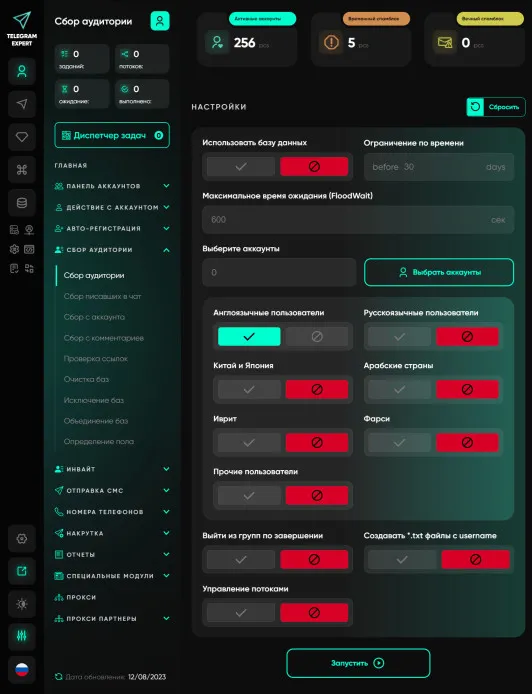
An audience is an essential component of any business. No matter what you sell, you need customers, you need an audience. Telegram Expert has truly enormous functionality; it has everything you need - collecting chat participants, collecting chat writers, collecting users from comments, etc. And all these modules are included in the base module. But this is not the main advantage; with Telegram Expert you will be able to work more efficiently, this is achieved through the introduction of advance...