
The Era of Synthetic Engagement: What Happens When AI Starts Talking to AI on Telegram
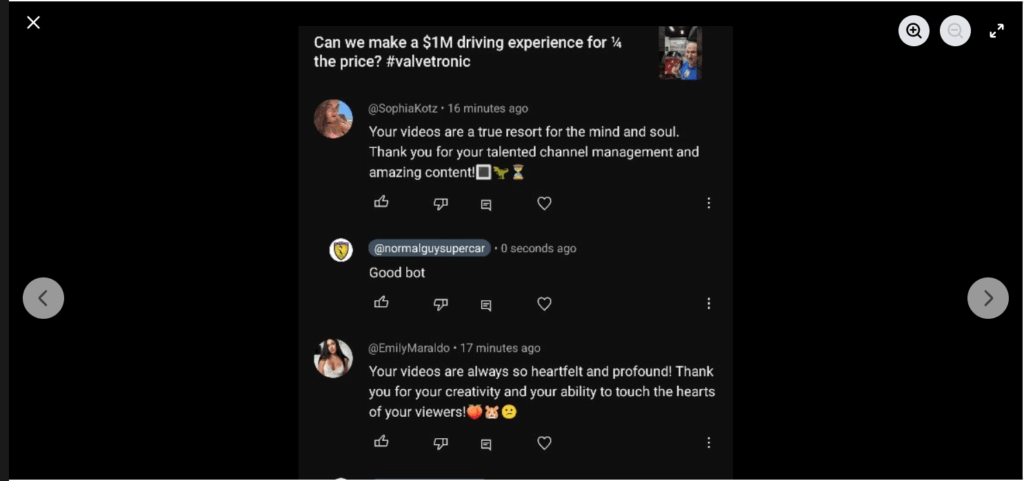
You look at the comments under a post: dozens of them, lively, full of emoji. An advertiser asks for engagement statistics. You send the numbers. But how do you know how many of those comments were written by real people, and how many by neural networks?
The problem is not that AI can write text. The problem is that the familiar metrics no longer reflect reality. If you still judge a channel by likes and ER, you are mistaking noise for signal. And that will cost you money.
Let us break down exactly what is changing in Telegram channel marketing, how this new reality affects three key roles — the channel owner, the advertiser, and the analyst — and what specific steps you need to take so your metrics become truthful again.

What is happening to your metrics right now
Suppose you have a channel with 50,000 subscribers. You publish a post. An hour later, it has 200 views, 15 comments, and 40 likes. You are satisfied: there is activity.
Now imagine that 5 of those 15 comments were written by a generative bot. The other 10 people see those 5 comments and also start writing, because it feels good to join a live discussion. As a result, you get 25 comments: 5 from AI and 20 from real people. But without those first five bot comments, the real discussion might never have happened at all.
You stop understanding what content truly gets your audience going. The post may have been boring, but a bot artificially warmed up the discussion. You see high numbers and decide that this topic works. A week later, you publish a similar post, there is no bot around, and you get zero comments. Because last time, the success was not yours — it was algorithmic.
You cannot trust engagement on a single post in isolation. You need to look at the dynamics and consistency of activity. If some posts have heated discussions while neighboring posts are completely silent despite the same reach, bots were most likely involved somewhere.
How this affects negotiations with advertisers
The Telegram advertising market has been growing at a furious pace over the past two years. Advertisers pay for reach and engagement. But they are not fools. Large brands and agencies are already starting to demand more than screenshots of statistics: they want comment exports and audience analysis.
For example, an advertiser looks at your channel. The views are good, and the ER is 8%. They ask to see the last 20 comments. They scroll through them and notice that half of the accounts were registered in the past two weeks, have no avatars or AI-generated avatars, and the comments look like rewrites of your own post.
What does the advertiser do? They either reduce the price threefold or walk away. Because they need real people who will see their product, not SIM boxes and neural networks that will not buy anything.
That is why you need to start preparing not only numbers for the advertiser, but also proof of audience quality. For example: a breakdown by account registration date (the older, the better), comment uniqueness analysis (template-like phrases are a red flag), and the ratio of active subscribers to passive ones. If you cannot show this, the advertiser will find someone who can.
How to tell a real commenter from a neural network: three practical methods
Theory is useful, but you need a practical guide. Here are three methods that already work.
First method — topic-shift testing. Ask the bot a question that moves away from the original post. A human will switch context easily. A neural network often keeps circling around the same idea or responds with a template. For example, under a post about the weather, write: "What area do you live in?" A bot will start talking about the weather in general; a person is much more likely to give specific details.
Second method — time-pattern analysis. Bots usually reply either too quickly (less than 5 seconds for a medium-length comment) or too consistently (exactly every 2 minutes). A real person might answer in 10 seconds, or in an hour, or at 3 a.m. Chaos is a sign of life.
Third method — cross-references. Write: "Do you remember when you said in the previous post that..." A bot does not remember. It has no context unless it is very expensive and specially trained. A person will either remember or say they do not. A bot will pretend to remember, but it will likely get the details wrong.
These methods do not provide a 100% guarantee, but they let you quickly filter out 70-80% of primitive generative bots.
How to rebuild your metrics system: three steps
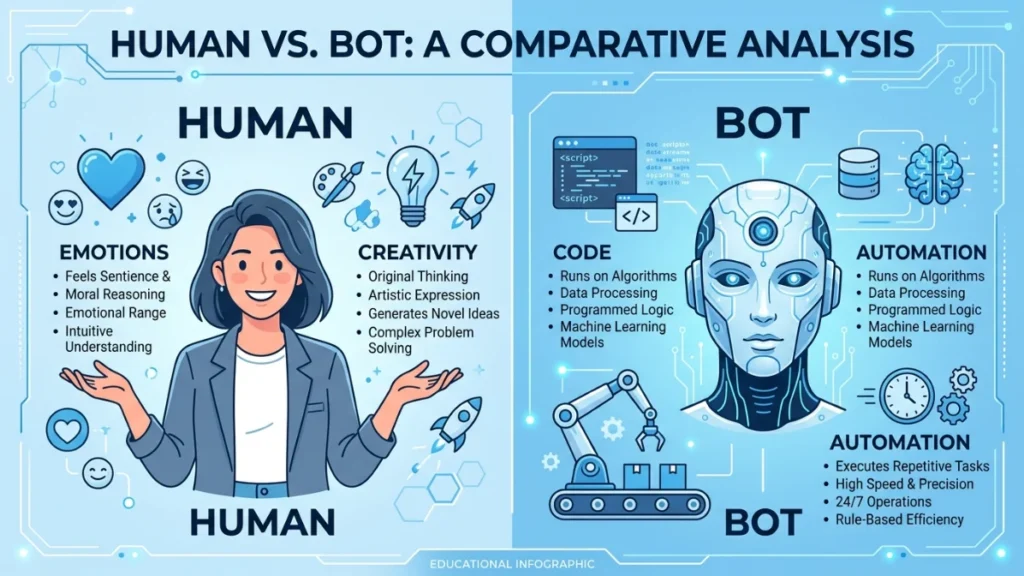
In the era of synthetic engagement, you cannot rely on a single indicator. You need a combination of metrics that are hard to fake, even for advanced AI.
Introduce a "live reach" coefficient. This is not just views, but views after which a user performed at least one action: opened media, clicked a link, or stayed on the post for more than 15 seconds. This can be faked, but it is much harder and more expensive than simple views.
Analyze comment depth. Do not count only the number of comments; count the number of replies to comments, meaning dialogue threads. Bots often leave standalone messages and rarely respond to replies. A live discussion creates threads 3-5 levels deep. If a post has 50 comments but not a single reply, you are looking at monologues, not a discussion.
Track retention inside the channel. Bots can subscribe and like every post. But they rarely return to old posts, rarely use channel search, and rarely click pinned messages. Analyze what share of activity comes from fresh posts (the first 2 hours) and what share comes from posts older than a day. A real audience always has some percentage of late activity. Bots have almost none.
What will happen in a year: three scenarios for Telegram marketing
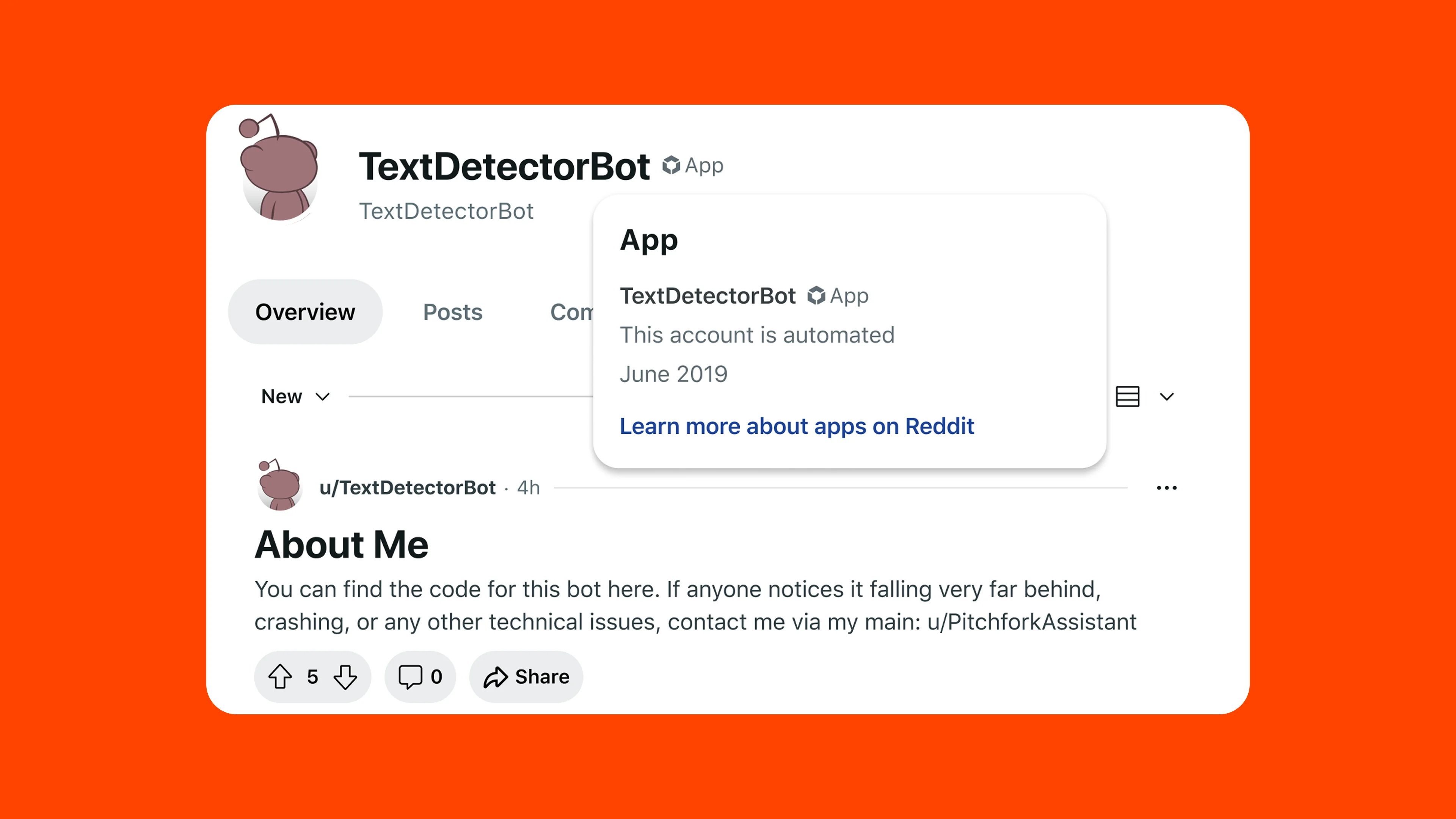
Based on what Reddit and other platforms are already doing, we can forecast how events may develop.
Scenario one (optimistic for marketers): Telegram introduces internal bot labeling. An official API appears for checking whether an account is "human". Marketers get clean data, but lose the advantage held by those who learned to filter audiences manually before everyone else.
Scenario two (realistic): Telegram introduces nothing. The market starts demanding independent audience audits from channel owners. Third-party services appear that verify subscribers for a fee. Advertising prices in channels without confirmed audience quality fall by 40-60%.
Scenario three (pessimistic): bots evolve so much that they become impossible to distinguish even by behavior and connections. Engagement finally stops being a meaningful indicator. Advertisers shift to paying for real target actions (link clicks, form submissions, purchases), and all Telegram marketing moves toward end-to-end analytics.
You should start preparing for this scenario now: set up tracking for transitions from your channel to your website or bot so you can prove effectiveness with money, not likes.
What to do tomorrow: a specific checklist
Do not wait until the problem becomes a catastrophe. Here are five actions you can take right now.
Take the three latest posts with the highest ER. Export all comments. Manually (or with a simple script), estimate how many accounts were registered in the past month. If it is more than 20%, you have a problem.
Leave a comment under a fresh post yourself (or ask a moderator to do it) with a simple question that requires a relevant answer. See how many people answer that exact question, and how many simply like it or write "I agree". A live audience answers questions; bots avoid specifics.
Ask three different subscribers (from among those who comment often) to message you privately. Real people will write; bots will not. It is a simple test, but a very revealing one.
Recalculate ER excluding comments shorter than 10 characters (emoji, "OK", "👍"). Compare it with your regular ER. If the difference is greater than 30%, a significant share of the activity is empty noise.
If you sell advertising, add a separate line to your media kit: "share of verified audience by account age". The higher this metric is, the higher you can raise your price. Advertisers are already starting to ask. Be the first to answer.
Summary
AI comments are already distorting engagement metrics. You do not know what share of your activity is real.
Advertisers will start demanding proof of audience quality. If you are not ready to provide it, you will lose money.
You can distinguish a bot from a human by topic shifts, response timing, and memory of previous conversations.
Introduce new metrics: comment depth (dialogue threads), live reach coefficient, and retention on older posts.
Tomorrow, go through the five-point checklist above. It will take an hour, but save you months in the future.
The era in which neural networks communicate with neural networks at scale has already begun. Those who continue to blindly trust likes will be left looking foolish. Those who learn to filter and rebuild their metrics will gain a competitive advantage: advertisers will pay them more for proven honesty.
Important: this website is the only official website of the Telegram Expert project. Licenses, updates, and official technical support are available only through this website. Any other websites offering Telegram Expert are not affiliated with BLB.Team and are either unofficial or fraudulent.

Download Telegram Expert - software for Telegram promotion
Telegram Expert is professional software for fast channel growth and sales in Telegram. Launch mass mailings and invites, warm up accounts without bans, consolidate dialogs in one place, and scale your team. All in one window - fast, safe, and tailored to your tasks.
What it can do:
- TDATA Converter - массово переводит session+json в TDATA.
- Booster - account warm-up via smart dialogs to increase trust.
- Registrar - account creation via any SMS services with the sms-activate standard.
- Duplicator - a second session for existing accounts for transfer and protection.
- Forwarder - routes incoming replies to a working group and sends replies to clients.
- Interceptor - catches messages by keywords from chats/channels and forwards them to you.
- Invite via admin - invitations even to restricted groups.
- Channel and chat cloner - full copies, including protected content.
- Reporter - mass complaints about messages/users/channels.
No one has left a comment yet

How to Manage Multiple Telegram Accounts: Tools and Best Practices
Preview: Running multiple Telegram accounts for marketing? This guide covers what Telegram's anti-spam system actually detects, how to choose the right gateway type, and a step-by-step warm-up schedule that keeps your accounts alive long-term. Running multiple Telegram accounts is standard practice for any serious marketing operation. You need separate accounts for different campaigns, client projects, geographic regions, or A/B testing message strategies. A single account simply can't cover ...
Why Telegram Accounts Die at Scale — and What It Actually Has to Do with Sessions and Network Infrastructure
Most teams figure this out only after they've already lost dozens of accounts. Not before. After. At small volumes, Telegram behaves predictably enough. Accounts stay alive, sessions hold, distributed network nodes cycle — and the whole thing feels manageable, like a system you understand. But the moment real scaling begins — hundreds of accounts, parallel tasks, blasts and invites running simultaneously — the picture shifts. And not gradually. More like a wall. One day everything works, two ...
How We Run 50+ TikTok and Instagram Accounts: A Practical Setup Guide with Antidetect Browsers and Mobile Network Tools
If you are trying to drive traffic to a Telegram channel, a CPA offer, or an online store in 2026, short-form video is still the most reliable free organic channel available. Posting three clips a day on a single personal account rarely brings consistent volume. But when you manage 50 accounts posting three clips daily, you publish 150 videos every single day. Even if 40 of those videos get only 600 views, a handful will catch the algorithm and hit 50,000 to 200,000 views, sending h...

Telegram Infrastructure Without Weak Links: What to Check and How Telegram Expert and Pay2.House Help Cover Key Tasks
table { border-collapse: collapse; width: 100%; color: #ffffff; background-color: transparent; } th, td { border: 1px solid #666666; padding: 10px 8px; text-align: left; background-color: #1a1a1a; } th { background-color: #2a2a2a; } A Telegram advertising launch rarely fails because of one major issue. More often, the problem appears at the intersection of several small ones: an employee lacks the required access, a card fails ...